
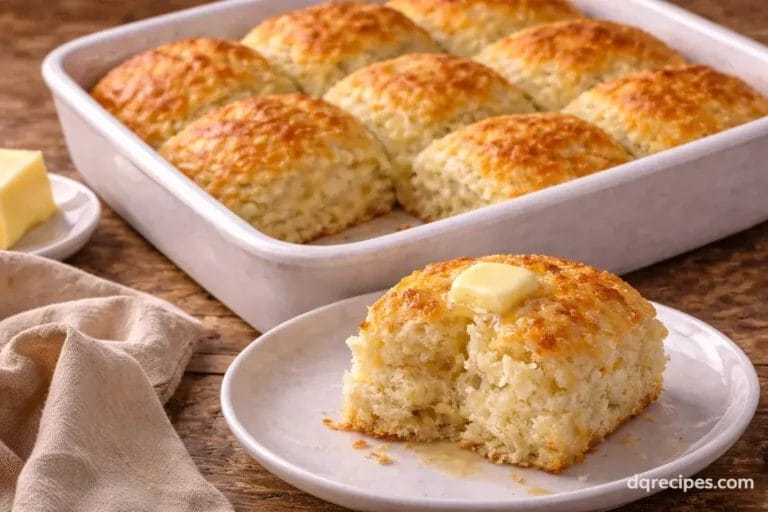

Hey there, biscuit lovers! I’ve got the BEST news for you – you can make those incredible, viral butter swim biscuits WITHOUT buttermilk on hand!
I know, I know, buttermilk is one of those ingredients that seems to only be used for one or two recipes, and then it sits in your fridge forever. Not anymore!
These butter swim biscuits are absolutely game-changing.
And the best part? You only need regular milk and vinegar to make them!
No rolling. No cutting. No fuss. Just mix, pour, and bake.
If you’ve been intimidated by homemade biscuits before, THIS is your recipe!
Quick Info:
⏰ Prep Time: 5 minutes
⏰ Bake Time: 20-25 minutes
⏰ Cooling Time: 5 minutes
⏰ Total Time: 30 minutes
🥐 Yield: 9 biscuits
📊 Level: Super Easy (Beginner-Friendly!)
What You’ll Need
Ingredients (Just 6 Simple Things!):
For the Buttermilk Substitute:
- 2 cups whole milk (room temperature is best)
- 2 tablespoons white vinegar OR lemon juice
For the Biscuits:
- 2½ cups all-purpose flour
- 4 teaspoons baking powder
- 1 tablespoon granulated sugar
- 2 teaspoons salt
- ½ cup (1 stick) unsalted butter
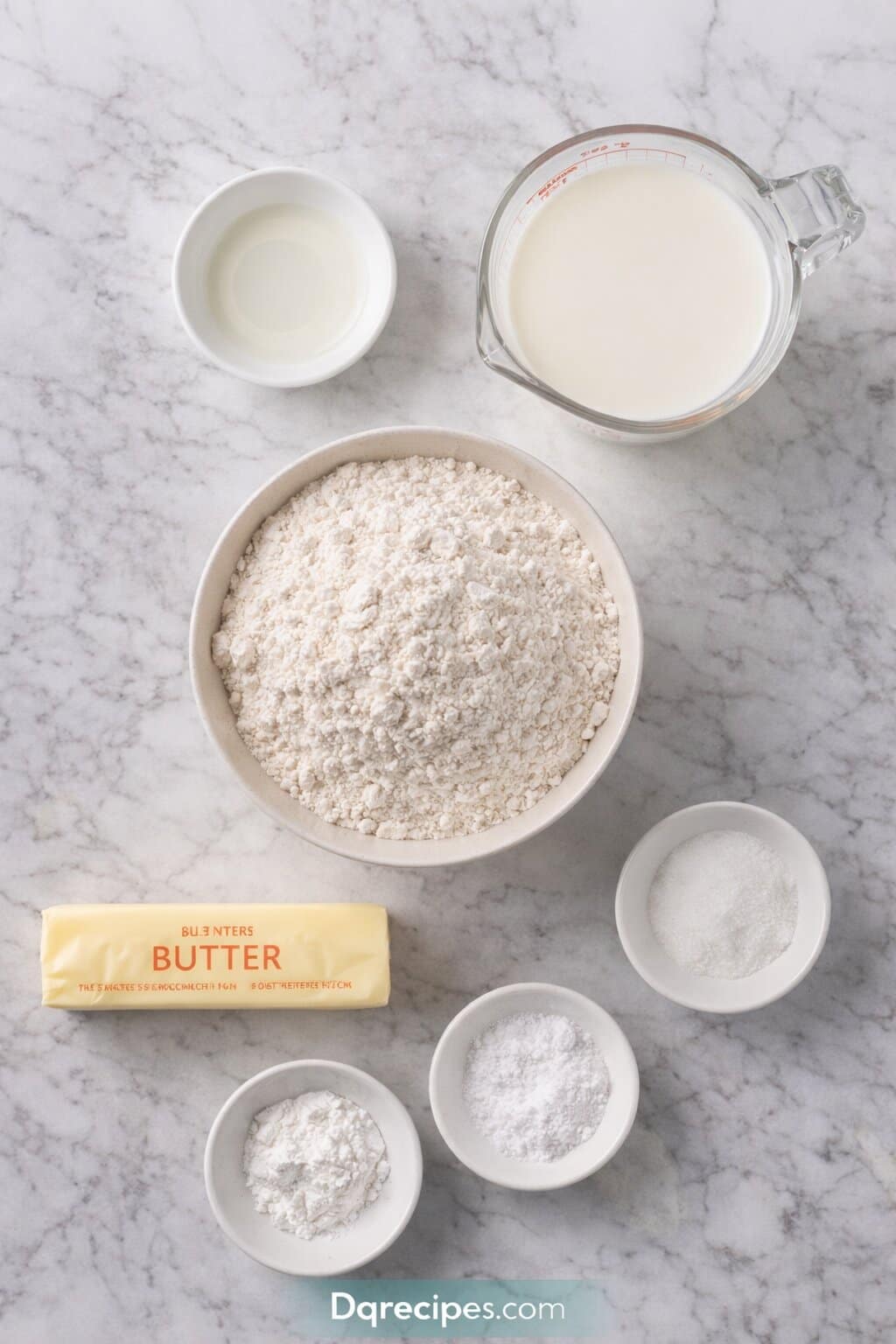
That’s it! Seriously, just 6 ingredients total!
Equipment You’ll Need:
- 8×8-inch baking dish (glass or metal)
- 2 mixing bowls (1 medium, 1 small for milk)
- Whisk
- Measuring cups and spoons
- Spatula or wooden spoon
- Sharp knife
- Optional: Cookie sheet (to catch any butter overflow)
The Buttermilk Substitute That Works Perfectly
Here’s the secret: making your own “buttermilk” is SO easy, you’ll wonder why you ever bought the real thing!
The Simple Formula:
- 1 cup whole milk + 1 tablespoon acid (vinegar or lemon juice) = 1 cup buttermilk substitute
For this recipe:
- 2 cups whole milk + 2 tablespoons white vinegar (or lemon juice) = 2 cups buttermilk substitute
How it works: The acid (vinegar or lemon juice) curdles the milk slightly, creating that thick, tangy texture and flavor that buttermilk provides. Let it sit for 5-10 minutes and you’ll see it thicken and curdle – that’s exactly what you want!
Does it really work? YES! I’ve made these both ways, and honestly, I can barely tell the difference. The substitute works perfectly for baking!
Step-by-Step Instructions (Super Easy!)
Okay, let’s make these incredible biscuits! I’m going to walk you through every single step so you feel totally confident.
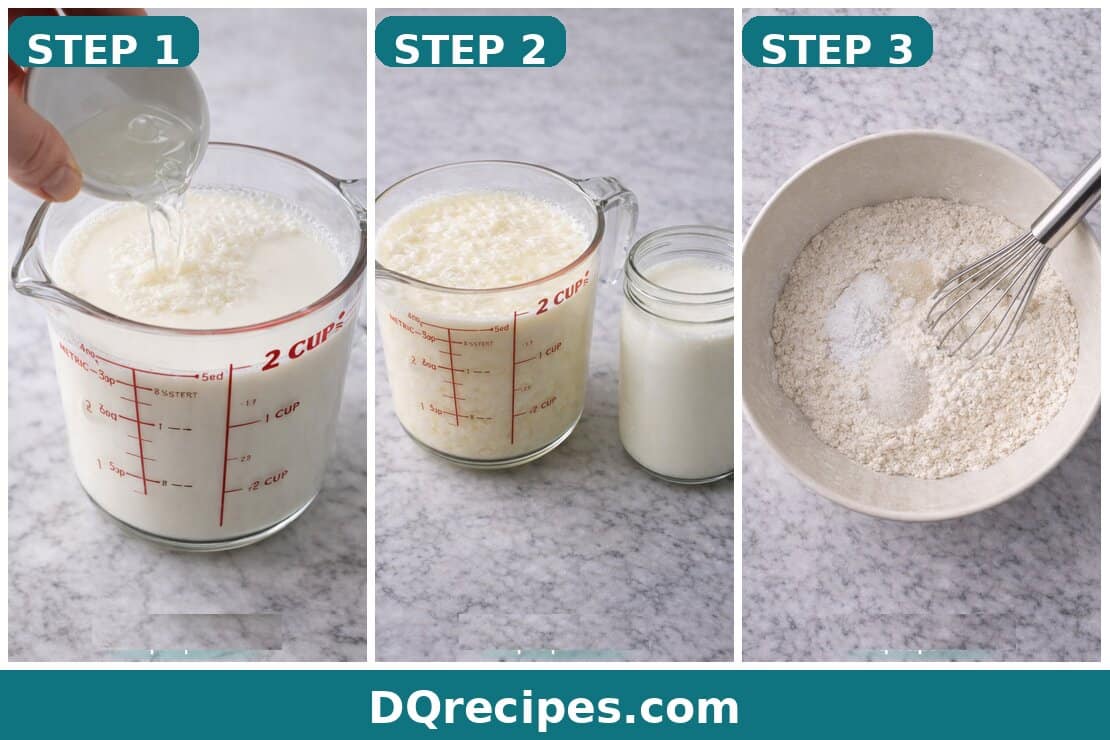
Step 1: Make Your Buttermilk Substitute (5 minutes)
First things first – let’s make that buttermilk substitute!
In a measuring cup or small bowl, combine:
- 2 cups whole milk
- 2 tablespoons white vinegar (or lemon juice)
Stir it together and set it aside for 5-10 minutes. You’ll notice it starts to look slightly curdled and thicker – PERFECT! That’s exactly what we want. It’s mimicking real buttermilk.
Why this step is important: The acid reacts with the baking powder in the recipe to help the biscuits rise and get fluffy. Plus, it adds a subtle tangy flavor!
Pro Tip: Use room temperature milk if possible. Cold milk works too, but room temp mixes better.
Step 2: Preheat Your Oven (5 minutes)
Preheat your oven to 450°F (232°C).
Yes, that’s HOT! This high temperature is crucial for creating those crispy, golden edges while keeping the inside soft and fluffy.
Beginner Tip: Make sure your oven is FULLY preheated before baking. If you put biscuits in a not-quite-hot oven, they won’t rise properly!
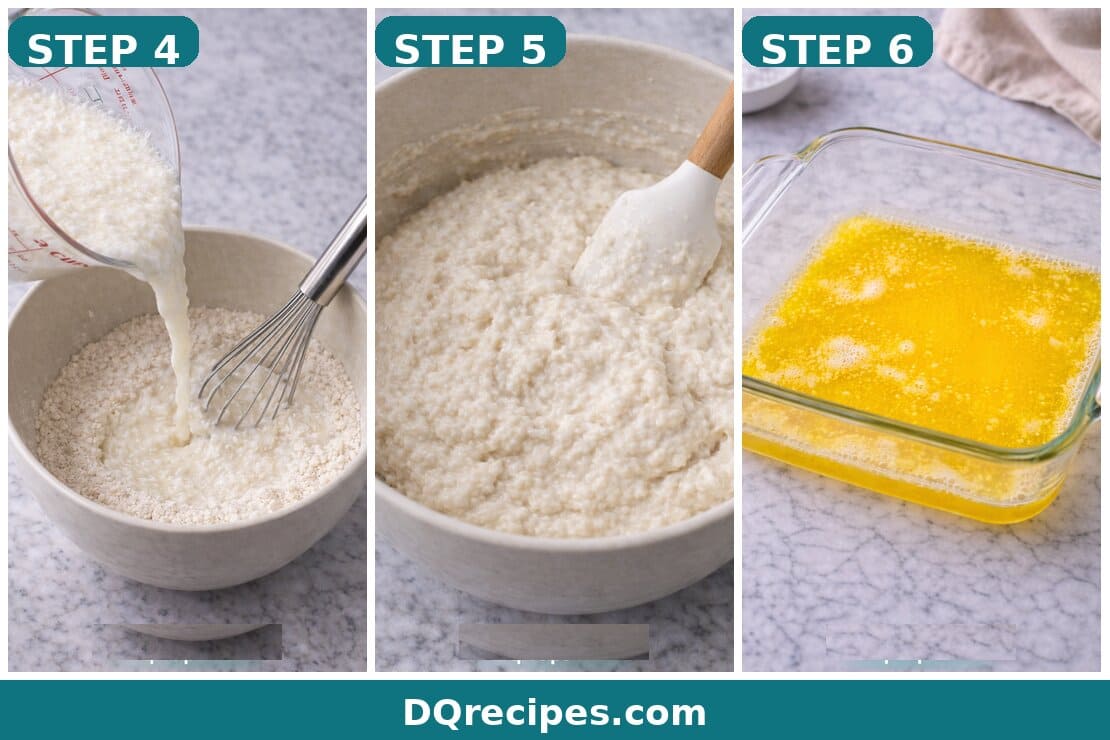
Step 3: Melt the Butter (2 minutes)
While your oven is preheating, melt your ½ cup (1 stick) of butter.
You can do this in:
- Microwave: 30-45 seconds on high
- Stovetop: In a small saucepan over low heat
Pour the melted butter into your 8×8-inch baking dish and set aside.
Watch your butter! You want it melted, NOT browned or burned. Just melted and golden is perfect.
Step 4: Mix the Dry Ingredients (2 minutes)
In a medium mixing bowl, whisk together:
- 2½ cups all-purpose flour
- 4 teaspoons baking powder
- 1 tablespoon sugar
- 2 teaspoons salt
Whisk really well so everything is evenly distributed. The whole mixture should look uniform with no lumps of baking powder.
Why we whisk: This distributes the leavening (baking powder) evenly so your biscuits rise uniformly!
Step 5: Add the Milk Mixture (2 minutes)
Pour your milk-vinegar mixture (which should be slightly curdled by now) into the bowl with the dry ingredients.
Using a spatula or wooden spoon, stir everything together until JUST combined. You want a thick batter that’s slightly lumpy – that’s PERFECT!
CRITICAL: Don’t overmix! Mix just until you don’t see any more dry flour. The batter should be thick, like thick pancake batter, and it’s okay if it’s a little lumpy.
Why no overmixing? Overmixing develops the gluten in the flour, which makes your biscuits tough instead of tender and fluffy. We want tender!
Step 6: Pour Batter Over Butter (1 minute)
Now for the fun part! Take your baking dish with the melted butter.
Spoon or pour the thick biscuit batter right on top of the melted butter.
The butter will rise up around the sides – that’s exactly what you want! It’s supposed to look like the batter is “swimming” in butter (hence the name!).
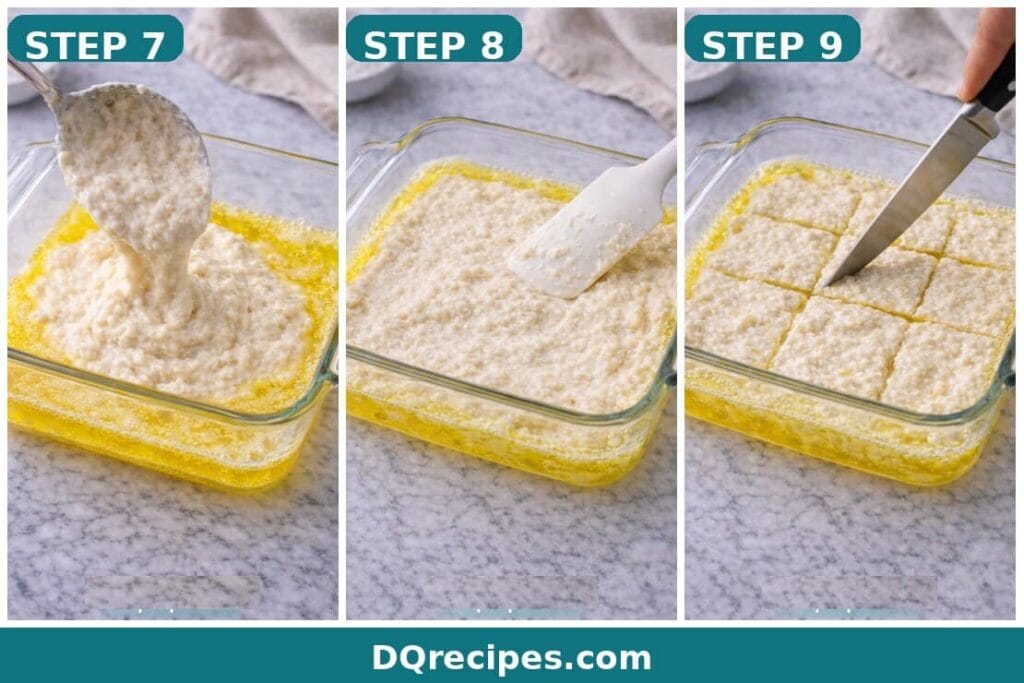
Step 7: Spread and Score (2 minutes)
Use a spatula to gently spread the batter into an even layer, pushing it out to touch the edges of the pan.
It doesn’t need to be perfectly smooth – rustic is good! Just make sure it’s evenly distributed.
Now take a sharp knife and cut the unbaked batter into 9 squares (3×3 pattern). Just score the top – you’re creating guidelines for where to cut after baking.
Why score before baking? This helps the biscuits separate easily after baking and ensures even-sized portions.
Step 8: Bake (20-25 minutes)
Place your baking dish in the preheated 450°F oven.
If you’re worried about butter spillover (it can happen!), place the baking dish on a cookie sheet to catch any drips.
Bake for 20-25 minutes, until:
- Tops are golden brown
- Edges are crispy and golden
- A toothpick inserted in the center comes out clean
- The butter is bubbling around the edges
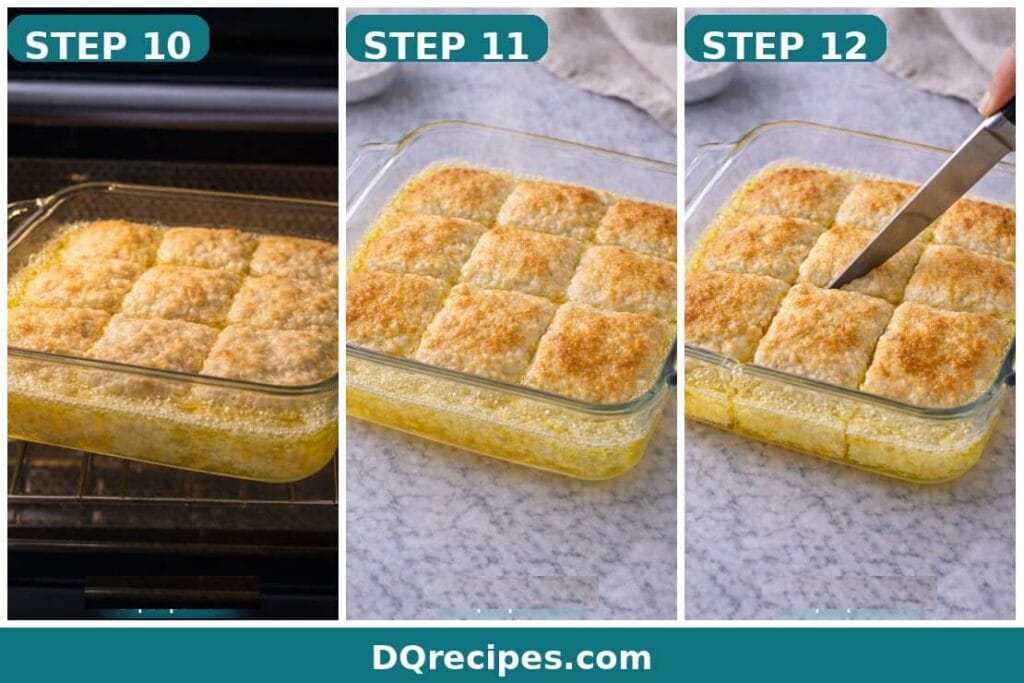
Don’t open the oven door for the first 15 minutes! Opening it releases heat and can make your biscuits fall.
Step 9: Rest and Serve (5 minutes)
When the biscuits come out of the oven, they’ll still be bubbling with butter – it’s SO tempting to dig in, but wait!
Let them sit in the pan for 5 minutes. This allows:
- The biscuits to finish setting up
- The excess butter to be absorbed
- The structure to firm up enough to cut cleanly
After 5 minutes, use a knife to cut along your scored lines and separate the biscuits.
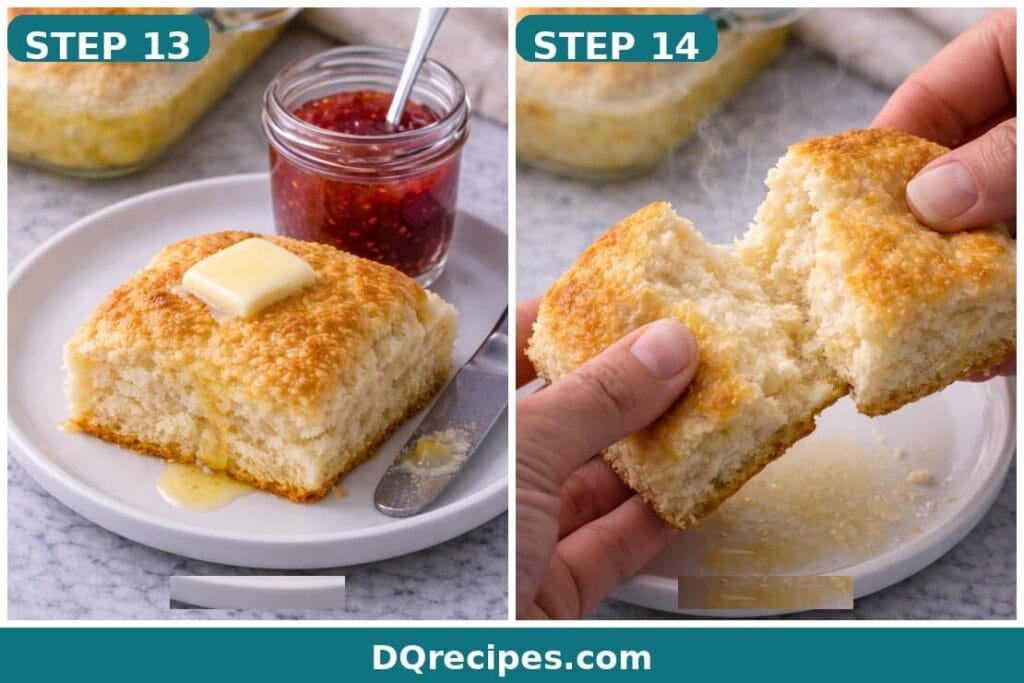
Serve warm and enjoy the buttery, fluffy perfection!
Why You’ll LOVE These Butter Swim Biscuits
✨ NO buttermilk needed – Just milk + vinegar (you have both!)
🧈 Unbelievably buttery – Baked in a pool of butter!
😍 Crispy edges – Golden, crunchy, butter-soaked perfection
☁️ Fluffy interior – Soft as clouds inside
⏱️ SO quick – Mix in 5 minutes, bake, done!
🙅♀️ No rolling or cutting – Easiest biscuit method ever
👶 Kid-friendly – So easy, kids can make them!
💰 Budget-friendly – Simple pantry ingredients
🎯 Foolproof – Seriously, you can’t mess these up
😋 Addictively good – Warning: you WILL eat more than one!
What Are Butter Swim Biscuits?
If you haven’t heard of butter swim biscuits yet, buckle up! This Southern-style biscuit recipe has taken the internet by storm, and for good reason.
Instead of the traditional method (cutting cold butter into flour, rolling, folding, cutting out circles), butter swim biscuits flip the script:
- The batter – It’s more like a thick batter than a dough
- The butter bath – You pour the batter over melted butter in a pan
- The bake – As they bake, the biscuits absorb butter from below while crisping on top
- The result – Crispy, buttery, focaccia-like edges with pillowy soft centers
It’s literally the easiest biscuit method ever invented, and the results are SPECTACULAR!
Beginner Tips for Perfect Biscuits Every Time
🥛 Use whole milk: It creates the best texture. 2% works too, but skim milk doesn’t work as well
🍋 Either vinegar or lemon juice works: Both create the same reaction. Use what you have!
⏰ Let the milk mixture sit: Those 5-10 minutes are important for proper curdling
🌡️ Don’t skip preheating: A fully hot oven is crucial for proper rise
❌ Don’t overmix: Lumpy batter is GOOD! Overmixed = tough biscuits
🧈 Watch your butter: Melted is good, browned is bad
📏 Use the right pan: 8×8 or 9×9 inch works. Too shallow and butter spills
🔪 Score before baking: Makes cutting so much easier later
⏳ Don’t skip the rest: Those 5 minutes let butter absorb and biscuits set
🔥 Hot oven is key: 450°F creates those crispy edges!
Common Mistakes to Avoid
❌ Skipping the milk “curdling” time – Give it the full 5-10 minutes!
❌ Using skim milk – Won’t work as well. Use whole or 2%
❌ Overmixing the batter – Stir just until combined!
❌ Cold milk – Room temperature works better
❌ Burning the butter – Just melt it, don’t brown it
❌ Using a too-shallow pan – Butter will overflow!
❌ Opening oven too early – Wait at least 15 minutes before peeking
❌ Not spreading to edges – Batter should touch all sides of pan
❌ Cutting too soon – Wait the 5 minutes! Patience!
❌ Oven too cool – Make sure it’s fully preheated to 450°F
Storage & Reheating
At Room Temperature: Store cooled biscuits in an airtight container for up to 2 days.
In the Refrigerator: Store covered for up to 5 days. They’ll lose some of their crispy edge texture but still taste great!
In the Freezer: Wrap each biscuit individually in plastic wrap, place in a freezer bag, and freeze for up to 3 months.
Reheating:
- Oven: 350°F for 5-10 minutes (best method for crispy edges!)
- Microwave: 20-30 seconds (quick but softens the crispy exterior)
- Toaster Oven: 350°F for 3-5 minutes
- From Frozen: Thaw at room temp or reheat directly from frozen at 350°F for 15-20 minutes
Pro Tip: These are definitely best fresh from the oven! Plan to serve them the same day if possible.
Serving Suggestions
These butter swim biscuits are incredibly versatile! Here are my favorite ways to serve them:
For Breakfast:
- With butter and honey
- Topped with scrambled eggs and cheese
- As a breakfast sandwich with bacon/sausage and eggs
- With sausage gravy (biscuits and gravy!)
- Slathered with jam or preserves
- With apple butter
For Dinner:
- Alongside chili or soup
- With fried chicken
- Next to pot roast
- With meatloaf
- Alongside any stew
- With BBQ dishes
As a Snack:
- With butter and cinnamon sugar
- Spread with cream cheese
- Topped with peanut butter
- With Nutella
- Just plain warm from the oven!
My Personal Favorite: Split one open while still warm, slather with salted butter, and drizzle with local honey. HEAVEN! 😇
Variations & Add-Ins
Want to customize your butter swim biscuits? Try these variations:
Cheesy Biscuits: Add 1 cup shredded cheddar cheese to the batter. Top with more cheese before baking!
Garlic Herb Biscuits: Add 1 teaspoon garlic powder and 1 tablespoon dried herbs (Italian seasoning, thyme, or rosemary) to dry ingredients.
Cheddar Jalapeño: Add 1 cup shredded cheddar and ¼ cup diced jalapeños.
Blueberry Biscuits: Gently fold in 1 cup fresh blueberries. Top with a simple glaze after baking.
Everything Seasoning: Sprinkle everything bagel seasoning on top before baking.
Honey Butter: Mix honey into the melted butter before pouring into pan.
Sweet Cinnamon: Add 1 teaspoon cinnamon to dry ingredients and sprinkle cinnamon sugar on top after baking.
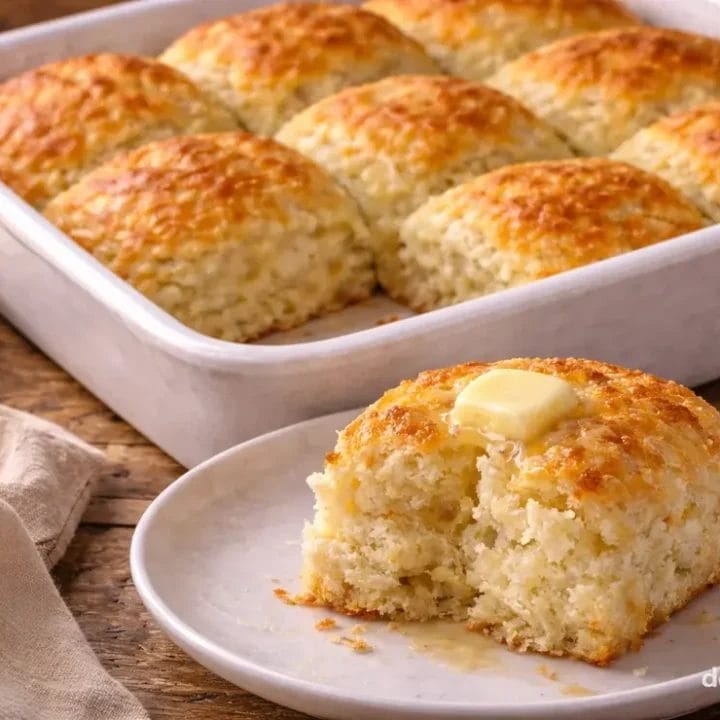
Butter Swim Biscuits Without Buttermilk
Incredibly easy butter swim biscuits made WITHOUT buttermilk! Just milk + vinegar. Crispy, buttery edges with fluffy insides. No rolling, no cutting. Ready in 30 minutes!
Ingredients
Buttermilk Substitute:
- 2 cups whole milk (room temperature preferred)
- 2 tablespoons white vinegar OR lemon juice
Biscuits:
- 2½ cups all-purpose flour
- 4 teaspoons baking powder
- 1 tablespoon granulated sugar
- 2 teaspoons salt
- ½ cup (1 stick / 113g) unsalted butter
Instructions
1: Make buttermilk substitute: In a measuring cup, combine 2 cups milk and 2 tablespoons vinegar (or lemon juice). Stir and set aside for 5-10 minutes until slightly curdled.
2: Preheat oven: Heat oven to 450°F (232°C).
3: Melt butter: Melt ½ cup butter in microwave or on stovetop. Pour into 8x8-inch baking dish. Set aside.
4: Mix dry ingredients: In a medium bowl, whisk together flour, baking powder, sugar, and salt until well combined.
5: Add milk mixture: Pour the milk-vinegar mixture into dry ingredients. Stir with spatula just until combined. Batter will be thick and slightly lumpy – this is perfect! Don't overmix.
6: Add to pan: Spoon or pour batter over melted butter in baking dish. Butter will rise up around the sides.
7: Spread and score: Use spatula to gently spread batter to edges of pan. Use sharp knife to score batter into 9 squares (3x3 pattern).
8: Bake: Bake 20-25 minutes until tops are golden brown and toothpick inserted in center comes out clean. Butter will be bubbling around edges.
9: Rest: Remove from oven and let rest in pan for 5 minutes to allow butter to absorb.
10: Serve: Cut along scored lines to separate biscuits. Serve warm with butter, jam, or honey. Enjoy!
Notes
Milk: Whole milk works best. 2% works but skim milk not recommended.
Acid: Either white vinegar or lemon juice works – use what you have!
Curdling Time: Don't skip the 5-10 minute wait for the milk mixture to curdle.
Don't Overmix: Stir just until no dry flour remains. Lumpy batter = fluffy biscuits!
Pan Size: 8x8-inch or 9x9-inch works. Place on cookie sheet if worried about overflow.
Hot Oven: 450°F is crucial for crispy edges and proper rise.
Rest Time: Wait the full 5 minutes after baking before cutting.
Best Fresh: These are best served warm the same day.
Self-Rising Flour: If using self-rising flour, omit baking powder and salt.
Salted Butter: If using salted butter, reduce salt to 1 teaspoon.
Storage: Room temp 2 days, fridge 5 days, freezer 3 months.
Nutrition Information:
Yield: 9 Serving Size: 1Amount Per Serving: Calories: 256
FAQs
Can I use skim milk or 2% milk instead of whole?
Whole milk works best, but 2% is okay. I don’t recommend skim – it doesn’t have enough fat content and won’t work as well.
What if I don’t have white vinegar?
Use lemon juice instead! Either one works perfectly. You need 2 tablespoons.
Can I use self-rising flour?
Yes! If using self-rising flour, omit the baking powder and salt. The flour already has these mixed in.
My batter seems too thick. Is that normal?
Yes! The batter should be thick, like thick pancake batter. It’s much thicker than regular pancake batter but thinner than bread dough.
Can I make these in a different sized pan?
You can use a 9×9-inch pan (biscuits will be slightly thinner) or an 11×7-inch pan. Baking time might need slight adjustment.
Why are my biscuits greasy?
This could mean: (1) oven wasn’t hot enough, (2) you didn’t let them rest after baking, or (3) you used too much butter.
Can I double this recipe?
Yes! Make 1.5x the recipe for a 9×13-inch pan. Full double works in two 8×8 pans.
Do these freeze well?
Yes! Wrap individually and freeze up to 3 months. Reheat from frozen or thaw first.
Can I use salted butter?
Yes, but reduce the salt in the recipe to 1 teaspoon total.
Why do I need to score them before baking?
It creates guidelines for cutting and helps them separate cleanly after baking.
Final Thoughts
And there you have it – the easiest, most delicious butter swim biscuits you’ll ever make, and you didn’t need buttermilk! See? I told you it was easy!
These biscuits have become my go-to whenever I need a quick bread to go with dinner or want to impress someone with “homemade” biscuits without all the work. The milk + vinegar trick works like a charm every single time!
The best part? Once you make these a few times, you won’t even need to look at the recipe anymore. It’s THAT simple!
Remember the keys to success: ✓ Let your milk mixture curdle for 5-10 minutes
✓ Don’t overmix the batter (lumpy is good!)
✓ Make sure oven is fully preheated to 450°F
✓ Let them rest 5 minutes after baking
I promise these will become a family favorite. Everyone will be asking for the recipe!
Made these biscuits? I’d LOVE to hear about it! Leave a comment below and let me know how they turned out. And don’t forget to tag @dqrecipes on Instagram and Pinterest so I can see your delicious creation! 📸
Happy baking! 🥐